



Four Ways to Boost Efficiency for Packing Pet Food Products
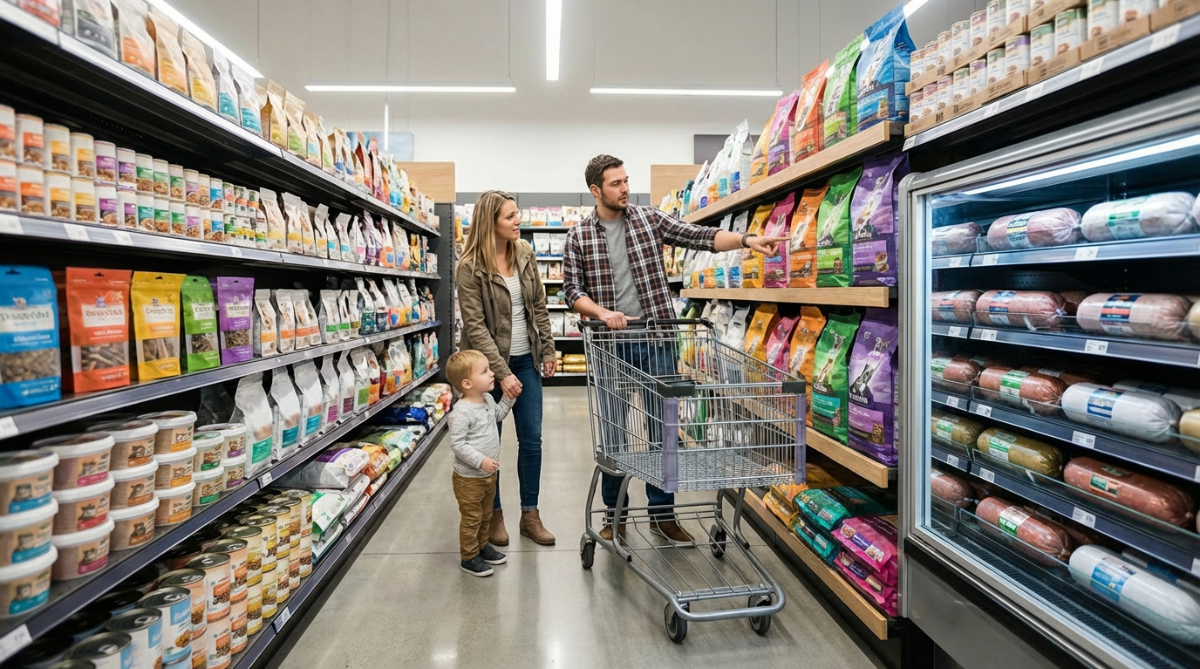
With a growing focus on wellness and ingredients, pet owners are choosing high-quality nutrition and personalization to ensure their companions live longer, healthier lives. In response, pet food manufacturers are adding a premium element to their secondary packaging, introducing stand-up bags, doypacks, and more sustainable materials for retail shelves and e-commerce.
However, as packaging formats evolve and product variety expands, production becomes more complex. Pet food producers and co-packers can no longer rely on manual packing or legacy systems to keep pace with higher throughput and increasing SKU counts. To stay competitive, many are exploring automation to support high-speed production, improve flexibility, and boost efficiency.
In this article, we’ll explore four of the challenges that impact line efficiency downstream and some of the solutions BPA offers to offset them. Topics we will discuss include:
- How different packaging formats impact line speed and require more precise handling
- The problem with manual packing for high-speed secondary packaging applications
- How rapid changeovers can reduce downtime and complexities in diverse runs
- The rise of fresh food items, like chubs, and the unique challenges they bring to packaging
1. Product & package flexibility
Pet food manufacturers are moving away from high-volume pillow bags toward more premium formats, like flat-bottom bags and doypacks (stand-up pouches). While these formats elevate shelf appeal and brand perception, they are significantly more difficult to handle on the packaging line. Their upright orientation requires more precise control during conveying and case packing.
Still, pillow bags can be found on the shelf, too, which speaks to the diversity of packaging formats in the pet food industry. To stay competitive, manufacturers need the flexibility to run a wide range of SKUs, including flat-bottom bags, smaller treat pouches, and large bulk bags, often on the same line, without sacrificing efficiency or consistency.
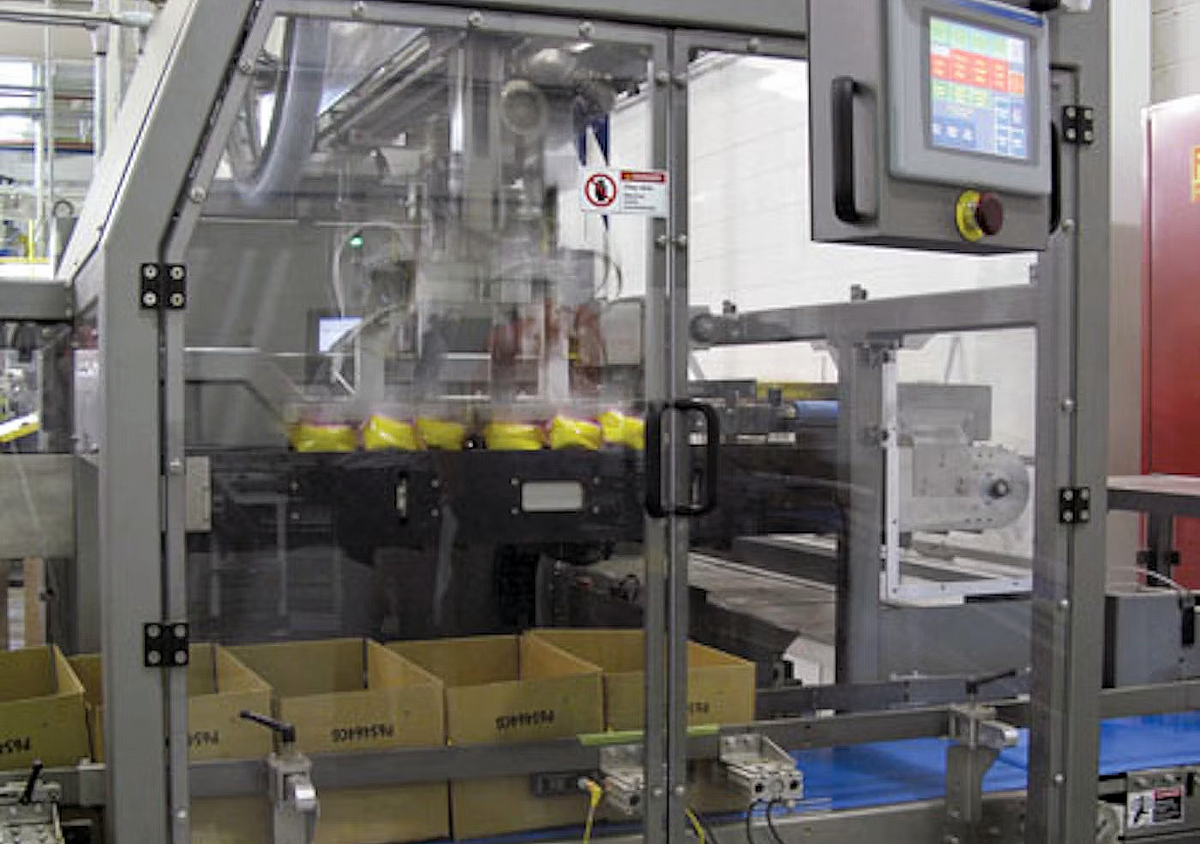
How BPA Can Help: BPA doesn't limit customers to one specific solution. For example, the Gantry 300 can load large flat bottom bags of dog food and pouches of treats into standard RSC, totes and more., but we offer many other solutions that support traditional and new packaging formats, including our Easy-D retail-ready case. Our goal is to ensure you have the flexibility you need in your secondary packaging equipment to accommodate any preferred packaging and products.
2. Manual packing complex SKUs
Many pet food plants still rely on manual labor for secondary packaging, often due to fears around automating difficult products. Manual packing is still perceived as flexible as operators can adapt to irregular items like bully sticks or oddly shaped treats, but that flexibility comes at a cost.
Manual packing often creates inefficiencies.
- Inconsistent throughput: Output varies by operator, shift, and fatigue level
- Higher error rates: Mis-packs, damaged products, and rework become more common
- Safety concerns: Repetitive motion and heavy bulk bag handling increase injury risk
- Labor challenges: Hiring and retaining reliable workers continues to be difficult
Many manufacturers hesitate to invest in automation due to upfront costs and concerns that the machines may struggle with complex secondary packaging tasks.
The reality of automation tells a different story.
- Handles variability with consistency: Designed systems can manage irregular products more reliably than manual processes
- Improves line performance: Reduces bottlenecks and stabilizes throughput
- Enhances safety: Minimizes manual lifting and repetitive tasks
- Delivers predictable output: Consistent, repeatable performance that doesn’t depend on labor availability.
How BPA Can Help: BPA supports the hesitant manufacturer by offering multiple price points and technology levels. From high-speed Spider 100V vision-guided robots to mechanical gravity case packers, we provide an entry point into automation for different client needs and budgets.
3. Rapid changeovers for diverse runs
In conversations with co-packers and producers, rapid changeovers are so important to their operations. With many plants running three, four, or even five SKUs in a single shift, even small inefficiencies can compound into significant lost production time.
Lengthy changeovers increase downtime, especially in legacy systems that rely on manual adjustments and labor-intensive tooling. These operator-dependent setups create variability, increasing the risk of errors and inconsistencies
To keep pace, automated secondary packaging systems must be capable of handling diverse pack patterns while enabling fast, repeatable transitions. The most efficient operations are moving toward recipe-driven, push-button changeovers, where software does the heavy lifting.
How BPA Can Help: BPA machines are designed for tool-less changeovers in less than five minutes as a core KPI. Our case packing machines allow operators to switch between vastly different sizes and pack patterns quickly. In addition to less downtime, rapid changeovers enable co-packers to agree to smaller, high-margin boutique runs without sacrificing their total daily output.
4. Material handling beyond the standard bag
The rise of fresh and less-processed products has introduced formats like refrigerated chubs, which bring added complexity to the line. Chubs are heavy, dense, and often slippery, making them difficult to grip, orient, and place consistently.
Material quality adds another layer of challenge. Lower-grade films or thinner packaging can tear under standard handling or vacuum pressure, especially when equipment isn’t tuned for gentler interaction.
How BPA Can Help: BPA specializes in custom-designed tooling. For chubs, we utilize specialized mechanical grippers or vacuum cups tailored to the product’s weight. Our experience in the snack and meat industries allows us to apply proven cross-industry technology to the pet food space.
See BPA’s Secondary Packaging Solutions at the Petfood Forum
If you will be attending the Petfood Forum at the Kansas City Convention Center on April 27-29, be sure to stop by Booth 1233 to meet the BPA team. This year, there will be live demonstrations of our Spider 100v vision guided robotic system picking and placing pet food treats into cases, cartons or cartoner infeed.
Speak one-on-one with our team to discuss your secondary packaging challenges and goals. You can register for this pet food-exclusive event here. If you can’t make it to Kansas City, our experts are a message away. Contact us to learn more about flexible automated solutions for the pet food industry.
.png)