



Secondary Packaging Machine Spotlight: Wraparound Case Packers
When it comes to choosing a case packing solution, the customer has more options than ever before depending on their needs and pain points.
Sometimes, their biggest goal is to optimize floor space. There simply isn’t much room to put in a lot of new equipment. Or they need to reduce material costs as RSC waste can certainly weigh down your bottom line. Maybe they’re even just considering automation for the very first time.
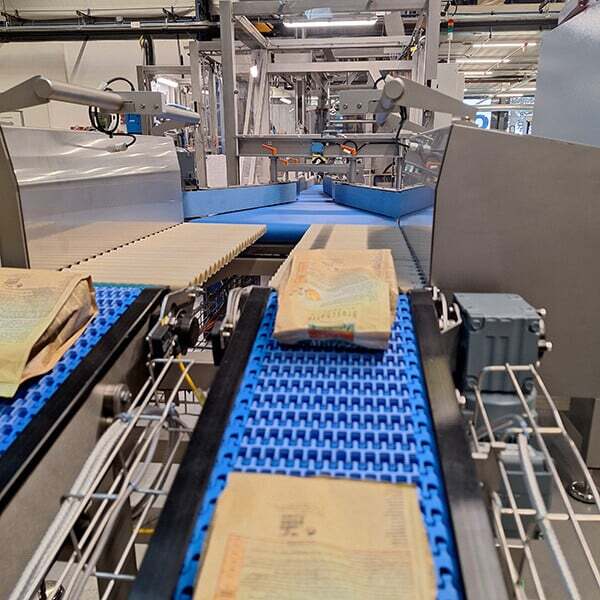
At BluePrint Automation (BPA), we don’t believe in a one-size-fits-all approach. In addition to robotics, gravity, and gantry-style case packers, we also specialize in wraparound case packers for customers in need of an all-in-one solution that handles everything from erecting to sealing in a single, compact footprint.
We’ll explore some of the benefits of using a wraparound as well as a few red flags to give you a full picture of ownership and operation. In our spotlight, we’ll touch on the following topics:
- How do wraparound case packers work?
- The types of packaging that work best with a wraparound machine.
- Pain points customers cite that help them decide on a wraparound.
- The different types of wraparound machines offered by BPA.
- New innovations, including a hybrid wraparound machine with robotics.
How wraparound case packers work
Unlike traditional modular systems that require a separate case erector, packer, and sealer connected by conveyors, a wraparound case packer is an all-in-one unit, meaning everything is self-contained. Here’s how the case packing process works with a typical wraparound machine:
- First, the machine receives individual products and groups them into specific patterns, such as a 12-count grid of cartons. This creates a solid product slug or brick.
- The machine pulls a flat, die-cut corrugate blank from the magazine. These blanks are flat and unglued and are less expensive and more efficient to store than pre-formed boxes.
- Instead of dropping the product into a box, the machine places the brick onto the flat blank and wraps the corrugate tightly around the product.
- Controlled by servo motors, the machine folds the side and top flaps. Hot-melt glue is applied to the flaps, and the machine applies brief pressure to seal the packaging for palletizing and distribution.
What are some typical products and applications for the wraparound?
The wraparound style is a versatile workhorse, capable of handling a variety of products, case styles, and packaging formats, including the following:
- Rigid Products: Cartons, bottles, tubs, and plastic containers work great because they provide a solid internal structure. The wraparound machine can create a box around the brick without the product collapsing or deforming, ensuring a tight, professional finish every time.
- Retail-Ready Packaging: A great example of this is our Easy-D, which can be built with a wraparound machine. It allows products to be loaded horizontally for speed but displayed vertically on the shelf with clean, die-cut edges that look professional for retail environments.
- Retail Trays & HSCs: Wraparounds can easily handle low-wall trays (common in the vegetable market) or half-slotted containers (HSCs) with lids.
- Hybrid Applications: Interestingly, BPA wraparounds can also function as end-load case packers, providing a bridge for companies transitioning from regular slotted container (RSC) cases.
The top three reasons why manufacturers choose a wraparound case packer
When we sit down with plant managers who eventually opt for the wraparound over a modular system, there are common pain points that will jump out at us, especially these three:
- Floor space is at a premium on the factory floor. Because the wraparound is an all-in-one unit, it eliminates the need for 20–30 feet of conveyors and separate machines.
- Customers want to reduce their packaging materials. Since the case is wrapped tightly, you can often use the structural strength of the product itself to support the stack. This allows for thinner corrugate (lower ECT) and smaller blanks.
- Finally, companies often cite inefficiencies. On paper, one machine at 99.5% efficiency outperforms a three-machine line (erector, packer, sealer). When you multiply the efficiencies of three separate units (even if they are 99.5% efficient individually), the overall line efficiency will fall.
One Red Flag to Consider: A wraparound is an all-in-one system, meaning any micro-stoppage halts the entire process, whereas multi-machine lines often allow for manual Plan B packing during downtime. You should weigh all options with your sales engineer to determine the best solution for your particular pain points.
Finding your fit with BPA wraparound machines
BPA offers three distinct wraparound tiers, categorized by how they handle the orientation of your product inside the case:
Wraparound 100 (Horizontal)
Designed for products that maintain their orientation from conveyor to case. If a product arrives lying on its backside, it is shuttled or picked into the case in that same flat, horizontal position.
Wraparound 200 (Vertical)
Ideal for stand-up pouches or cartons that need to sit on their bottom edge. This system rotates the product during the loading process to achieve a vertical, face-forward orientation.
Wraparound 300 (Combination)
The most versatile option in the lineup, this machine is engineered to handle both horizontal and vertical patterns, offering maximum flexibility for diverse product lines.
Our sales engineers will analyze your required pack patterns, production rates, and infeed constraints. By evaluating these specific variables, they can determine which machine and infeed configuration will most efficiently deliver the necessary throughput for your operation.
What sets a BPA machine apart from the competition?
While many wraparound systems on the market offer similar basic functions, BPA engineers our machines to eliminate the common headaches of maintenance, slow changeovers, and logistical delays.
Most machines require manual adjustments that invite human error. With BPA, almost everything is servo-driven in our wraparound machines. When switching products, you might only need to swap a pusher plate, which should only take a few minutes, and the rest is automatic.
Additionally, BPA offers stainless steel machines at very competitive rates. Stainless steel looks better, lasts longer, and is significantly easier to clean. Finally, BPA wraparound machines are built in the US, which may be helpful for our US customers. They can avoid any import tariffs, have parts shipped faster, and speak with service technicians in their time zone.
How does the Spider Wraparound take efficiency and flexibility to a whole new level?
One of the biggest red flags with traditional wraparounds has been flexibility. They can struggle with non-rigid products or complex orientations. The Spider 300 Wraparound helps solve this problem.
By integrating a vision-guided Delta robot into the front end of the wraparound, we’ve made wraparound-style machines more attractive to customers who require different packaging formats at high speeds.
- Versatile Packaging formats: Forming vertical and horizontal pack patterns on the same system.
- Non-rigid Products: The Spider wraparound can pick and place stand-up pouches (such as bags of nuts or candy) and other non-rigid packaging. This ensures a tight fit without the risk of the product collapsing or the case losing its shape during the wrapping process.
- Precise Packing: If products come down the line at odd angles or need to be rotated 90 degrees to sit on their edge (like bagels or corn patties), the robot handles the orientation instantly. No more complex bump turns or diverging conveyors.
- High Speed Requirements: These robots can hit 90 to 110 picks per minute, allowing for high-speed case packing even with complex count patterns.
Production on the Spider 300 WA is currently underway in Holland and should reach the US later this year. We’re excited about this new innovation in wraparound case packing and think it will help us further accommodate our customers’ need for greater flexibility, efficiency, and throughput in a single all-in-one system. We’ll be providing updates on these new wraparound machines as they become available.
Wrapping up
For customers looking to reduce their packaging materials or save space on the factory floor, a wraparound is a great option. With new innovations arriving to further enhance performance and reliability, the future of wraparound machines is bright.
At BPA, we will help you weigh all the options, so whether you choose to go with the wraparound or another case packing system, it’s the best move for your bottom line. Contact us today to share your challenges and goals with our experts.