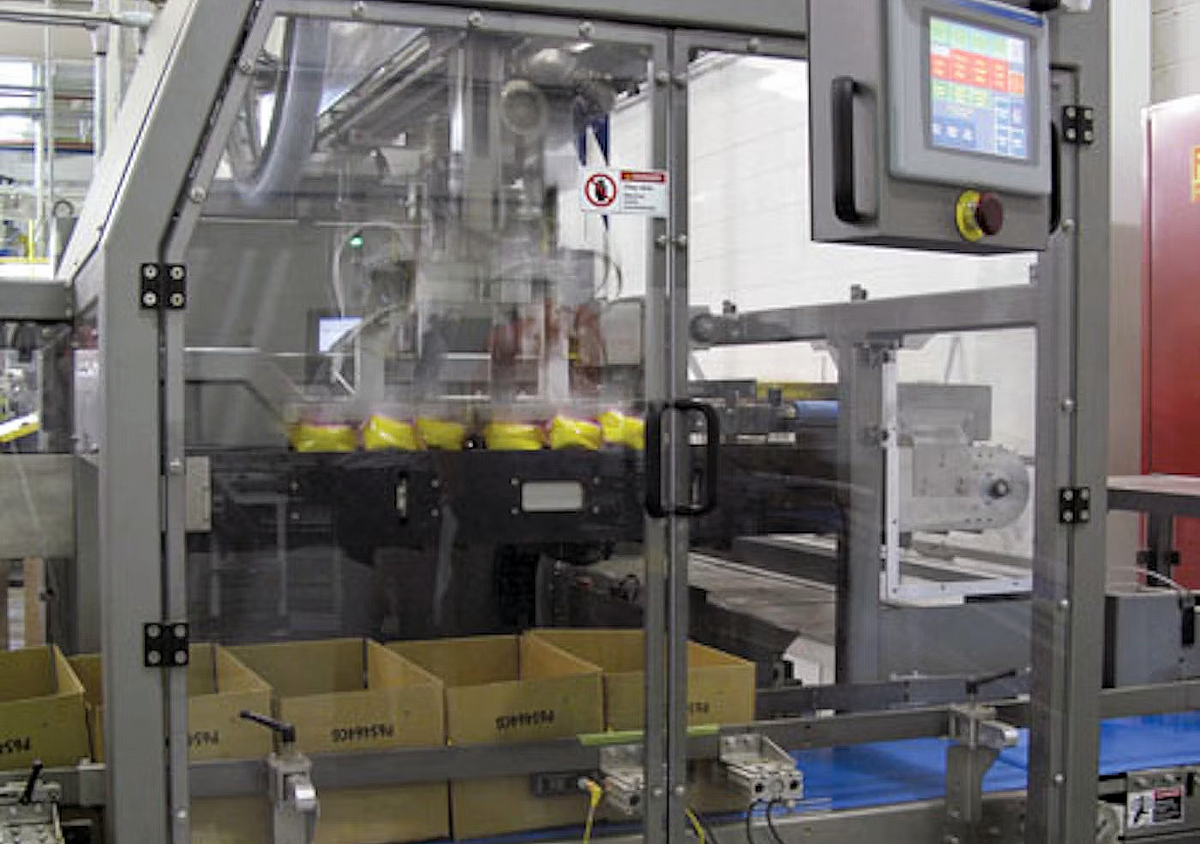




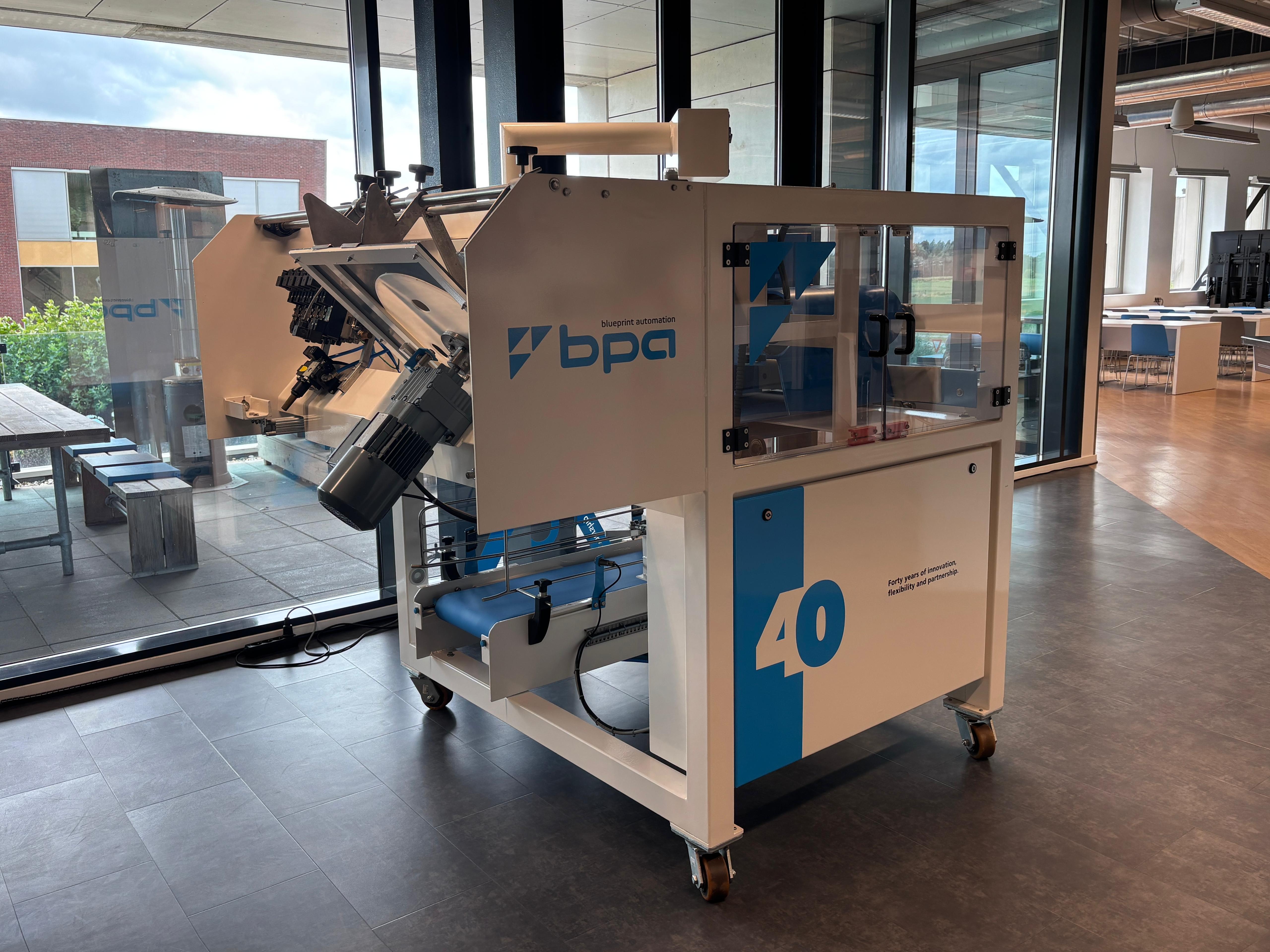
At BluePrint Automation’s (BPA) headquarters in the Netherlands, the first case packer we built more than 40 years ago still works. It sits in our cafeteria where our employees gather every day, serving as a reminder of where BPA began and how our engineering philosophy continues to shape the company today.
If you look at our machine lineup, there have certainly been some dramatic changes reflecting how the industry has evolved. But our approach to all secondary packaging challenges remains relatively familiar at BPA.
We work to understand the customer’s challenge, give talented people room to solve it, and create a solution that delivers lasting value.
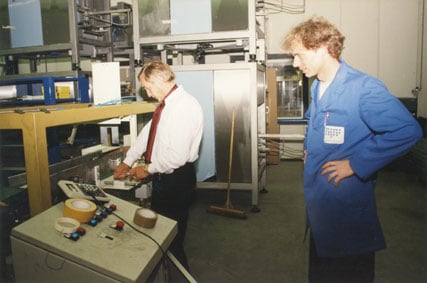
It started with our founder, Bob Prakken, and his original vision for what an automatic case packer should do. His son, Martin Prakken, built on that philosophy, creating the Customer Triangle and helping lead BPA’s expansion into the 21st century.
Today, our people carry those principles into a new era of automation, combining decades of mechanical engineering expertise with an increasingly software-driven approach. The technology continues to evolve, but the principles remain deeply rooted in where BPA began.
Solving a missing link in case packing
In the late 1970s, BPA founder Bob Prakken was an engineer working for a potato processing company. He saw that bags of frozen product were still being loaded into cases manually, even as other parts of the production process became more automated. He proposed a solution to his employer that wasn’t pursued, so he developed an automated case packing concept of non-rigid packages himself. BluePrint Automation was founded in the Netherlands in 1980 around that missing link in case packing.
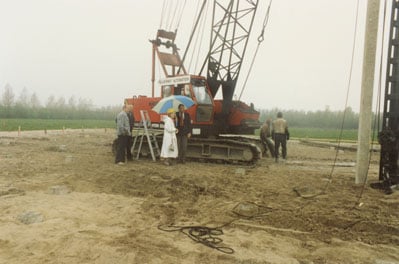
From the beginning, Bob’s vision for BPA went beyond simply putting bags into boxes. He wanted to optimize the whole system. Even then, BPA looked at the complete operation to understand what automation needed to accomplish once a manual task was removed. Our first patent, for example, addressed leak detection so poorly sealed bags could be identified before they were packed or caused problems within the system.
Early BPA machines also improved how product settled inside the case, creating denser packs that could reduce corrugate use and transportation costs. This whole system approach became an important part of our engineering heritage. We were always looking for a better way to solve the customer’s problem, even if that meant thinking outside the box to better put things into the box.
Building on the philosophy
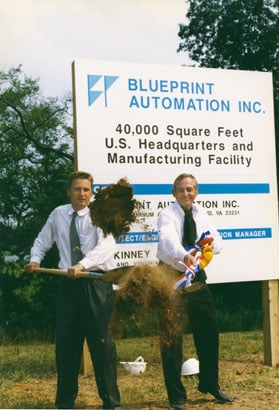
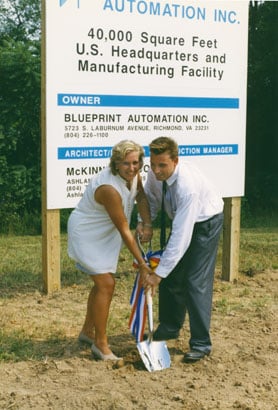
BPA grew with Bob’s vision supported by the people around him, including his son, Martin Prakken. Martin learned the business from an early age and became actively involved in BPA’s growth as the company expanded outside of the Netherlands.
He helped build BPA’s presence in the United States and played an important role in the development of BluePrint Robotics in Colorado, which extended the company’s capabilities into sophisticated vision guided robotics.
When ownership passed to him in 2012, Martin continued expanding the company’s reach and capabilities, including more international growth and the addition of wrap around packaging expertise through Racupack.
Martin also created the Customer Triangle, giving a clear structure to principles that had long guided BPA. Together, Bob and Martin helped BPA evolve without moving away from its roots.
As Gijsbert Dezaire, CEO of BluePrint Automation Group, describes it, “It was about case packing then and it’s about case packing now.”
The Customer Triangle defines the BluePrint difference
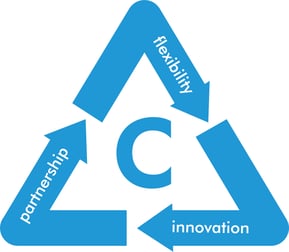
The Customer Triangle places Customer and Commitment at the center of BPA’s three defining values: Flexibility, Innovation, and Partnership.
Flexibility begins with listening
The right automation solution depends on the application, including its production goals, packaging formats, facility constraints, operator capabilities, and future plans. BPA does not assume that the same machine or level of automation belongs in every plant.
Being flexible means understanding individual conditions and being willing to adapt the solution around them. Customers understand their production problems better than anyone. BPA brings knowledge of the technologies and packaging methods that may be able to solve them.
Innovation is driven by customer requirements
Many BPA innovations begin with those initial conversations with customers about their secondary packaging goals.
“80% of our innovation comes from customer requirements,” Gijsbert says.
Customer challenges fill the innovation pipeline because solving them can lead to capabilities that are later scaled, standardized, or applied to other applications.
This keeps innovation connected to practical manufacturing needs. A new technology matters when it solves the right problem at an appropriate level of complexity for the customer.
Partnership supports long-term growth
A partnership with a customer begins before any equipment is designed and continues as their operation changes. Long-term relationships give BPA a deeper understanding of how a customer runs their line and make it easier to work through the next challenge together.
As BPA President Andre Boom puts it, “All we care about at the end of the day is doing what’s right for the customer.”
The people behind the machinery
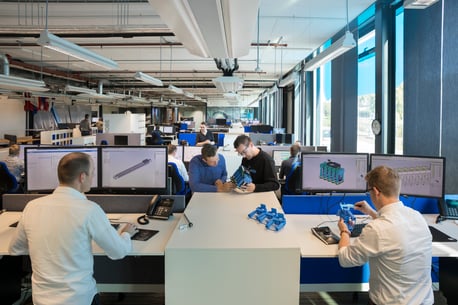
Our culture reflects the importance Bob placed on talented people. Employees are encouraged to take ownership, collaborate across departments, contribute ideas, and carry lessons from one project into the next.
Gijsbert sees a direct relationship between employee experience and customer experience.
“We make a choice to be the best employer so that people want to work for us and stay for a long time,” he says. “This enables us to be the best possible partner for our customers.”
Calvin Canady‘s career at BPA shows what a career at BPA can look like over time. Now the final assembly supervisor in Virginia, he has spent 28 years here. Calvin began in mechanical assembly while completing school in mechanical drafting and design. He spent time in mechanical engineering, returned to assembly, moved into electrical work, and eventually advanced into leadership. BPA also helped provide additional schooling to help Calvin’s professional journey into electrical work.
Today, he tries to provide mentorship to his team whenever he can to pay it forward. His advice to new employees is simple: “Ask questions. A lot of questions.”
New hires are paired with experienced leads, giving them someone to learn from as they become familiar with BPA’s equipment and standards.
Learning and growing at BPA
Mechanical engineer Jorrit Westerhof joined BPA in the Netherlands after graduating with a mechanical engineering degree. He wanted to work in design but was also attracted to the opportunity to see the machinery he designed move into production. Jorrit works in our all-wood extension to BPA headquarters in Woerden that highlights our commitment to sustainability, environmental awareness, and modern design..jpg?width=480&height=320&name=WOERDEN_BLUEPRINT_18_4R8A0561%20(2).jpg)
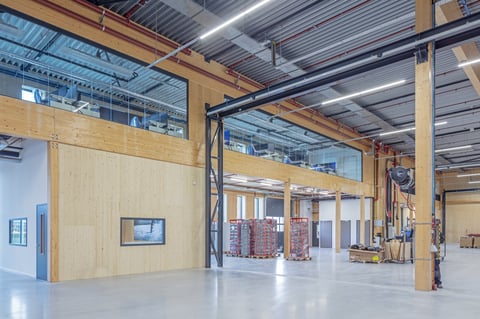
“The one I’m in is completely made from wood,” he says. “I really enjoy that facility because it is very modern. It is unique. You can smell the wood, of course. It almost smells refreshing.”
Within his first year, the trust he received from experienced engineers made an impact.
“What really stood out to me is I gained a lot of trust from my fellow engineers,” Jorrit says. “People that are more experienced really take the time to help me grow, to help me learn new things at BluePrint.”
That trust made it easier to ask for help, learn from mistakes, and move among projects in different stages as priorities changed.
Christian Peck found a similar environment after joining BPA’s software and controls team in Colorado.
“I think the people here are really what make the difference to me,” Christian says. During demanding project stages, Christian says he sees people from across the team united by a shared desire to make the system work well.
Career paths can also move in directions that were not obvious at the beginning. HR Manager Ezra Dasberg joined BPA with a technical background before moving into HR, continuing her education, and helping develop the company’s HR function.
“What I appreciate most is the genuine attention given to the person behind the employee,” she says. “The focus is not only on results, but also on how people are doing and how they can continue to thrive.”
Software is expanding what BPA machinery can do
Sten Goes leads Innovation at BPA from our headquarters in the Netherlands. He joined the company as an R&D engineer and became increasingly involved in software-focused development before moving into his current role as Innovation Manager. He describes BPA’s development process as highly hands-on and iterative. Teams experiment early, build prototypes, learn from testing and machines operating in the field, and use that feedback to refine the solution.
“The customer of course always knows best about the problem,” Sten explains. BPA, meanwhile, brings knowledge of the available technologies and potential solutions. Innovation comes from building a bridge between the two. Our latest innovations show the results of that collaboration.
BlueSight helps machines see and respond
BlueSight is BPA’s computer vision platform developed specifically for packaging applications. Traditional sensors can provide relatively simple information, such as whether something is present. Vision provides much more. BlueSight can determine product location and orientation, recognize touching or overlapping products, and identify which item is available to pick.
Using camera data as feedback, BlueSight automatically adapts the machine, making it more flexible and robust as line conditions and packaging formats change. In one application, cameras monitor bags as they move through a rotation section. Rather than relying only on fixed belt settings, the system uses that feedback to track how each bag is rotating and automatically adjust belt speeds accordingly.
This feedback loop is also an important step toward our long-term vision: no operator, no training, and no maintenance.
BlueLogic coordinates complex robotic decisions
BlueLogic takes that intelligence a step further. The AI-driven scheduler is designed to maximize collaboration between robots. On delta lines, multiple robots work together to pack the same boxes, and BlueLogic coordinates their decisions to increase pick-and-place efficiency and reduce product waste. This becomes especially valuable when requirements get more complex, such as variety packs, products with different sizes, or strict product-position requirements.
For example, in an ice cream variety pack line, multiple flavors can move through the system while multiple robots work simultaneously. BlueLogic coordinates the robotic decisions in real time so the line can achieve the required pack pattern while making efficient use of the product available.
BluePerformance extends partnership through the machine lifecycle
BluePerformance focuses on what happens after equipment enters production. The platform combines machine-performance information with standstills, settings changes, and event-linked video. When an intermittent problem occurs, operators and engineers can review what was happening around the event instead of waiting for the same issue to happen again.
Customers can analyze those insights themselves, while BPA can also use the information to provide additional support and recommendations. In that sense, BluePerformance becomes another way to extend our partnership with customers after installation.
Creating more capable machines with advanced software
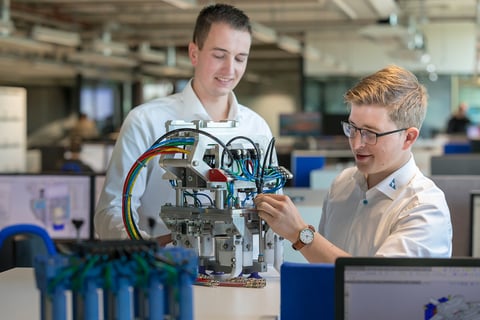
Historically, secondary packaging challenges often required additional mechanical components. Products might pass through extensive feeding and singulation equipment simply to reach a predictable position before a robot could pick them. BlueSight, BlueLogic, and BluePerformance give us new ways to address those challenges through software, creating more flexible mechanical systems and extending what the equipment can do.
The Blanks Destacker and Spider 300 Wraparound show what that combination of software intelligence and mechanical engineering can look like in practice.
Blanks Destacker
The Blanks Destacker automates one of the remaining manual tasks around case packing: replenishing case blanks. The mechanical system handles blanks and straps, while BlueSight provides the information needed to guide those actions. Vision can identify blank orientation, verify the SKU, recognize whether straps are present, and help determine where the system should act next.
Spider 300 Wraparound
Manufacturers increasingly need to handle more product sizes, packaging orientations, case formats, and changeovers while limiting labor and footprint requirements. The Spider 300 Wraparound combines robotic handling with BlueSight and BluePerformance to give the mechanical platform greater flexibility and greater visibility into its operation. The system supports horizontal and vertical loading and multiple secondary packaging formats, including wrap around, display, and Easy-D cases.
Wrapping up
The first machine in our cafeteria shows where BPA started. The innovations being developed today show how far the technology has evolved. Our long-term vision is to move toward machinery that requires no operator, no training, and no maintenance. It is an aspiration that continues to guide development as manufacturers and co-packers face labor constraints, higher performance expectations, more packaging formats, and increasing pressure to simplify operation.
Software will play a growing role in getting there.
“More and more, it’s all about software,” Gijsbert says.
Data-driven performance analysis, remote support, AI-based vision, and smarter robot collaboration are creating new ways to expand what secondary packaging machinery can do. The technology may continue changing, but the reason for developing it remains remarkably consistent.
Bob began by recognizing an unresolved problem on a packaging line and finding a better way to solve it. Martin helped build on that philosophy, expanding BPA’s capabilities and giving those values a clear structure through the Customer Triangle. Today, employees across BPA continue to apply the same principles as we support one another, develop new technologies, and solve complex challenges.
The technologies may continue to evolve, but our focus remains where it started: engineering better solutions for our customers.
.png)